
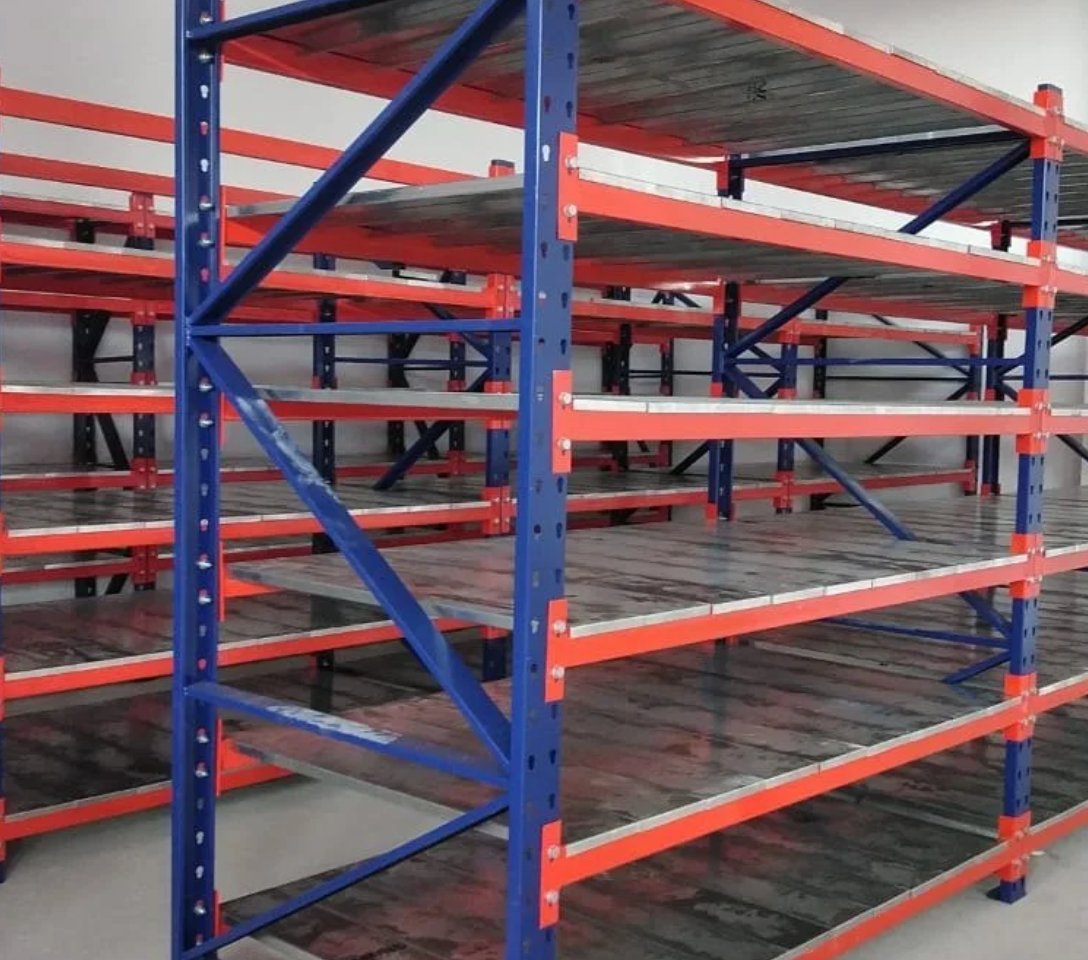
Pallet racks are designed and engineered to help warehouse operators store large quantities of materials in an organized, space-efficient manner. Heavy-duty pallet racks are constructed from heavy-duty steel and will support heavy loads while keeping the pallets secure. With heavy-duty pallet racks, you have more space to work with and a less cluttered environment, as well as increased productivity.
Heavy-duty pallet rack styles, sizes, and configurations are virtually limitless, so it is important to choose the style that is most appropriate for your business needs. It is important that the pallet rack you select provides the best support for your inventory, maximizes the efficiency of the pallet, and ultimately increases the life expectancy of the pallet's supportive structure.
A heavy-duty pallet rack is a sturdy, steel structure designed to hold a large number of palletized goods, usually at height, in a safe and efficient manner that allows for easy access by forklifts and warehouse personnel. Pallet racks are engineered to carry heavy weights per level, withstand possible impact, and also be stable throughout the day under continuous use.
Pallet racks are different from light and medium shelving systems because they are designed for an industrial setting where loads can be large, heavy, and constantly being moved throughout the day. Industrial warehouse shelving is designed for heavy weight, highly adjustable, and works with various sizes of pallets, as they are designed for a long, useful life and not just a temporary solution.
In my thousands of hours observing/working in and out of warehouses, it may not be sophisticated, but the easy and often learned lesson has been - a compromise on storage infrastructure costs more in damages and lost time, safety incidents, or other unforeseeable spiraling consequences. Provide the protection for your inventory and your people with stable, adequately rated storage in every aisle.
Designed right, operators can operate with confidence, faster order picking, and management visibility becomes clearer and better on the distribution stock levels and location. Confidence in the operation often means smoother audits, fewer lost pallets, and typically an improved on-time performance to your customer.
To find your perfect Pallet rack, first, you need to understand the major components and how these parts work together. Most heavy-duty racks are built around a similar structure, but the specifications of each component determine if the rack is average or high performing.
The primary structural elements normally comprise:
Accessories, including decking, pallet supports, safety bars, and column guards, add to the basic structure to create a Heavy load shelving solution, especially when working with mixed-size pallets or odd-sized items.
Different warehousing facilities may need various types of pallet racking systems, even if the load capacity is similar. Here at RCrisp Solutions, we have greatly benefited over the years when the existing racking system works best with the inventory profile and frequency of movement.
All can be built as a heavy-load shelving solution using sufficient steel profiles, beam sizes and safety factors as the basis for design and construction.
When a warehouse upgrades to a genuine Industrial warehouse shelving solution, the improvement is usually visible within weeks. One long-term client once described the change as “gaining an extra building without pouring a new slab,” simply because vertical capacity was finally being used correctly.
Major advantages include:
Safety is not just about compliance; it is about returning your people home, in the same condition they arrived. In many warehouse upgrades that RCrisp Solutions have done, prior racking systems have failed to be anchored, have had no beams locked, or signage for loads, which resulted in uneasy forklift operators and countless close calls.
A well-designed heavy-duty pallet rack utilizes high-quality steel, rated components, and established design standards, substantially minimizing the risk of collapse or progressive failure. Protectors, guards, and properly rated beams provide a cushion against bumps from day-to-day operations and accidental overloading, creating many great experiences with the racking system instead of daily stress.
Even the best heavy-duty pallet rack will not perform well if the rack layout is not appropriate. Year after year and projects, there is a common theme: the best storage systems are those where the storage design, material flows, and safety are mitigated as one system instead of several independent decisions.
In harsh conditions, the difference between a standard pallet rack and a true heavy duty pallet rack will be apparent over time. The coatings will need to endure varying degrees of humidity and temperature change and the occasional spill, while the welds and connections remain stable following thousands of load cycles.
Systems should be manufactured from quality steel, with dependable fastening means, and compliant with a widely accepted industrial racking standard. Consistent quality control during stages of manufacturing and after a surface treatment will increase the lifetime of your pallet rack and protect your investment significantly.
Many businesses start with lighter shelving and only later realize how quickly it reaches its limits. From experience, this usually happens when product ranges expand, order volumes climb, and pallets become heavier or more varied.
Compared with light- and medium-duty options, warehouse storage racks offer:
Choosing heavy-duty from the beginning avoids the disruption of a mid-life replacement.
From a practical point of view, heavy-duty pallet rack systems that perform best over decades are the ones that receive regular inspection and basic care. RCrisp Solutions has seen racks last far beyond their expected life simply because teams followed simple routines.
Effective habits include:
These steps cost little compared with the potential losses from a serious failure.
Conclusion
Choosing the right heavy-duty pallet rack configuration is basically about balancing structural integrity, smart design, and business as usual so that you can expand your warehouse space without compromising safety or efficiency. Once you start to think about pallet rack manufacturers as designed infrastructure rather than simply steel in the corner, you will realize improved space utilization, better flow, and trust in your service level to customers, as many RCrisp Solutions' customers have experienced across multiple applications over the years.
You can take the next step for a safer, more efficient warehouse by talking to an industry-trusted specialist about your Warehouse storage racks needs to turn the unused vertical space in your warehouse into productive and profitable storage.
Copyright © 2026 RCRISP SOLUTIONS INDIA PRIVATE LIMITED | All Rights Reserved. Website Designed & SEO By Webclick® Digital Pvt. Ltd. Website Designing Company India